

Hamel Gallery
An independent commerce platform for a one-of-one art collection.
Bentwood engineered a connected storefront and operations platform for Hamel Gallery—bringing artwork cataloguing, collector inquiries, payments, shipping, and order management into one system. Behind the gallery experience sits custom application logic for unique inventory, payment verification, fulfillment, and day-to-day administration.

An owned channel. A connected operation.
The challenge was larger than presenting artwork online. Hamel Gallery needed an independent channel where collectors could discover individual works, ask questions, and purchase eligible pieces—without separating those interactions from the gallery’s inventory and fulfillment records. Each artwork is distinct, so catalogue quality, purchase availability, and the operational handoff all had to work together.
- Catalogue
- Storefront
- Reservation / checkout
- Verified payment
- Order / fulfillment
Structured catalogue and publishing
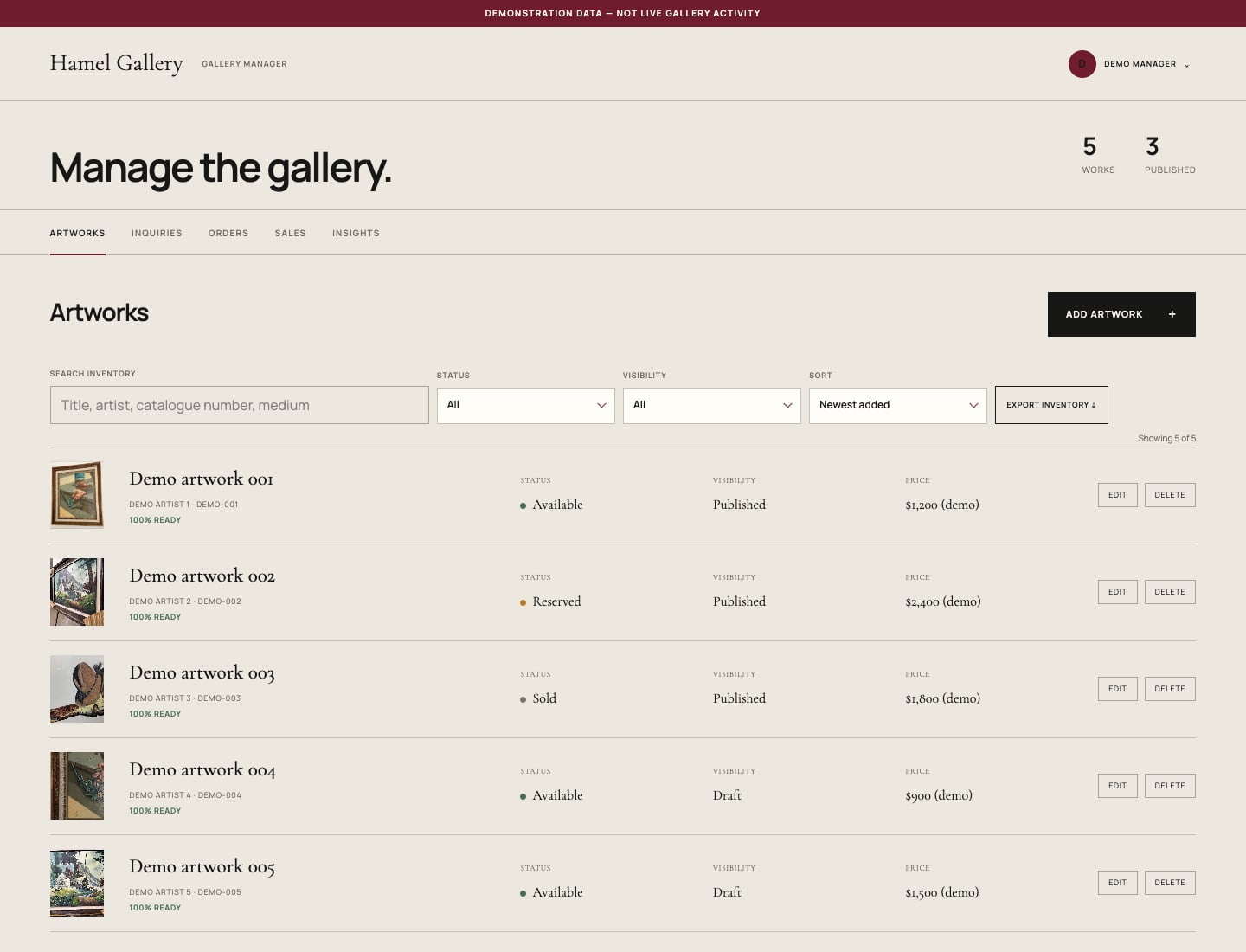
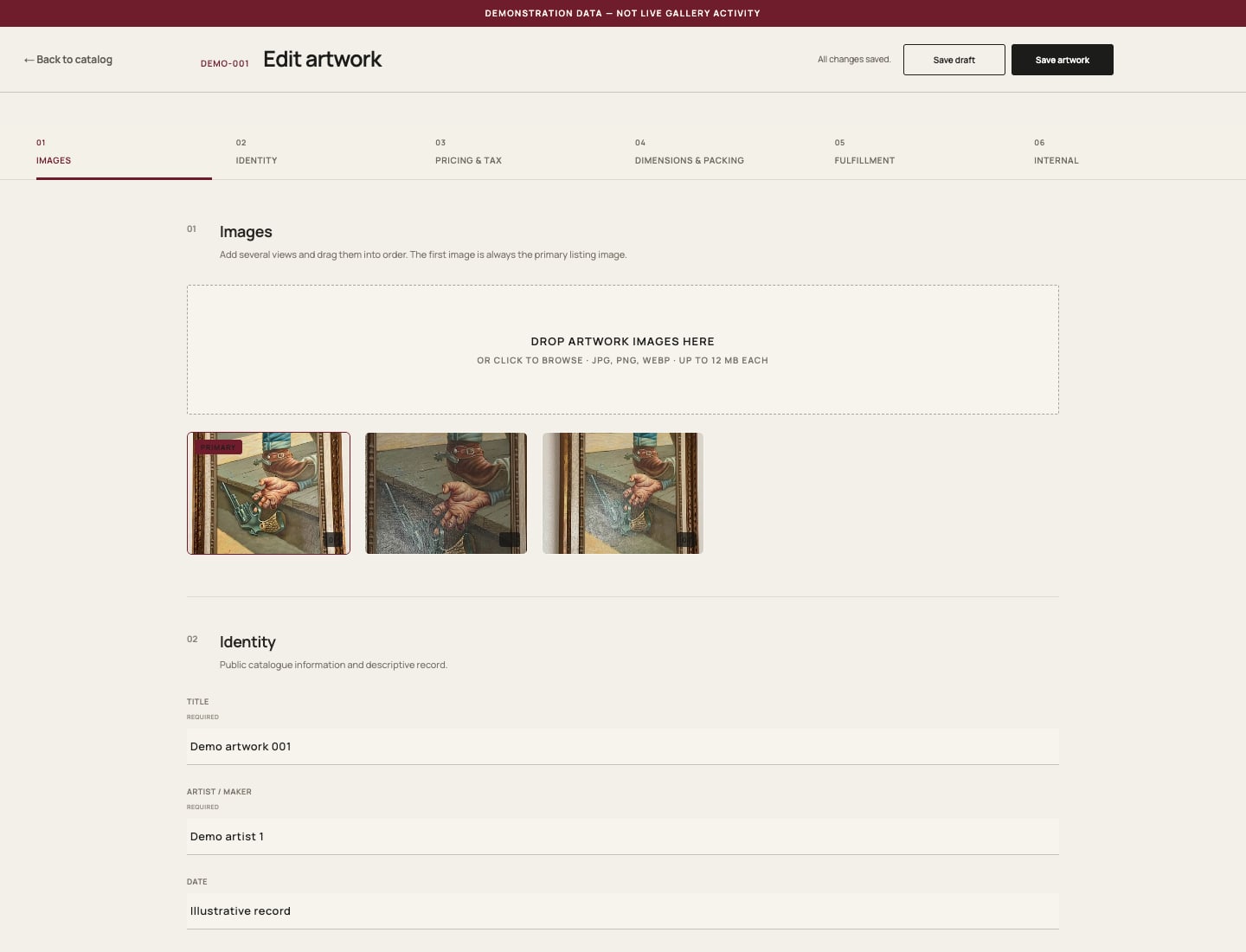
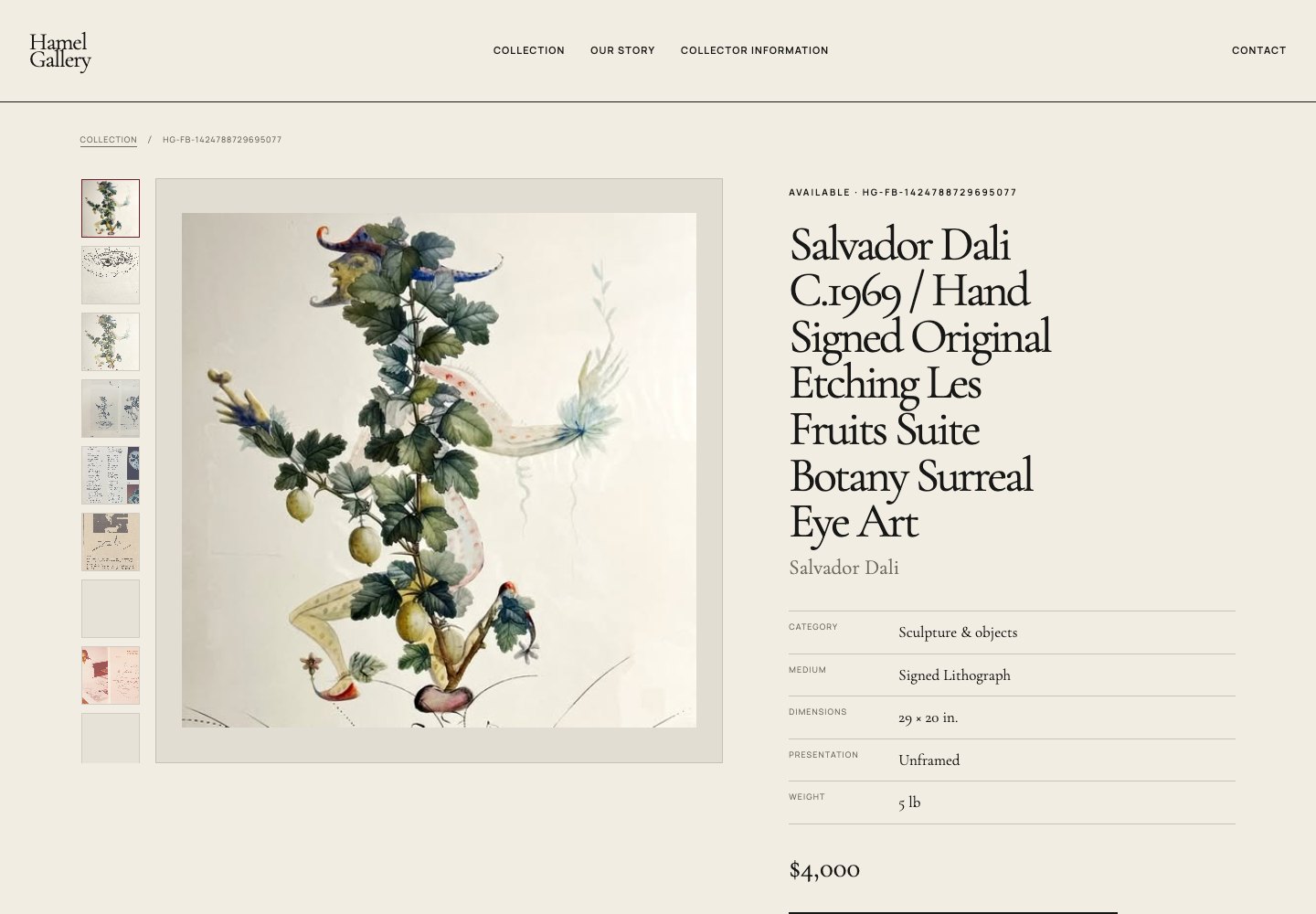
The catalogue models each work as a structured record, with artist, medium, dimensions, condition, pricing, and photography held together. Spreadsheet import and export support bulk administration, while catalogue identifiers keep records connected across updates. Publication validation checks essential information and imagery before a listing can go live. Incomplete imports remain drafts, giving the gallery a practical review stage rather than exposing unfinished inventory to collectors.
One-of-one inventory
A unique artwork cannot be treated like a product with an unlimited stock count. Checkout creates a timed reservation, temporarily separating a work being purchased from inventory available to other collectors. Availability transitions connect that reservation to the payment outcome. Expired-reservation recovery releases abandoned checkouts, so a collector leaving the payment flow does not leave the artwork indefinitely unavailable. The system coordinates these changes around the individual catalogue record.
Payment orchestration
Stripe Checkout handles the payment experience; custom server-side logic handles what happens around it. Signed webhook verification checks that incoming payment messages genuinely came from Stripe before they update gallery records. Confirmed payments drive order creation and artwork availability, while payment-status synchronization and refund handling keep the operational record aligned with the provider. A successful-looking browser return is not treated as proof that money has been received.
Shipping and fulfillment
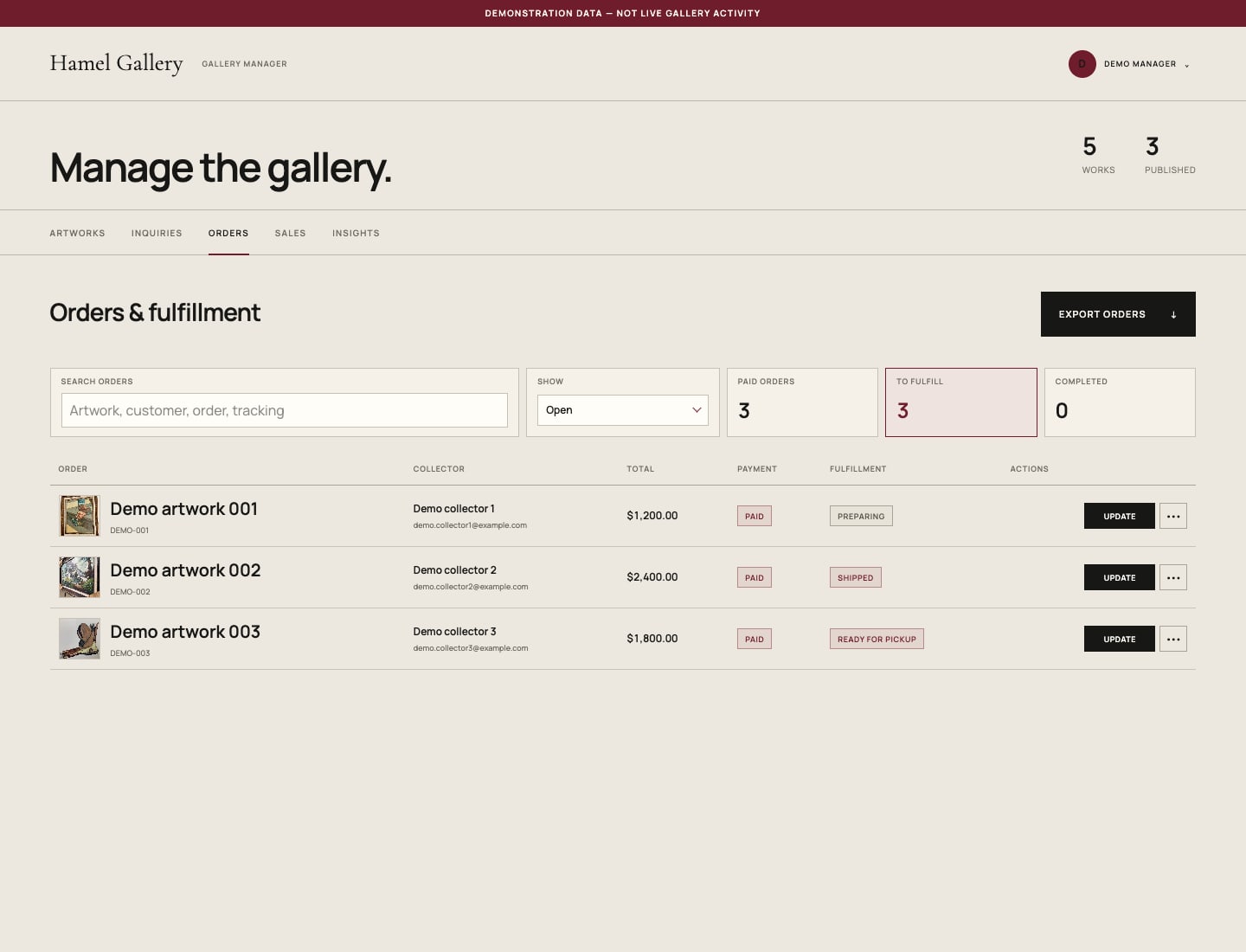
Shippo rate integration uses artwork packaging information and the collector’s destination to present parcel options. The server revalidates the selected rate before checkout, rather than trusting a price passed back by the browser. Pickup follows its own path, and works requiring a manual shipping quote stay outside standard parcel checkout. Label integration, tracking updates, and fulfillment statuses connect the order to its next practical step: preparation, collection, or shipment.
Private gallery operations
Behind the public collection, an authenticated workspace brings inventory, collector inquiries, orders, and sales records into one operating environment. Owner and manager permissions separate account-level control from routine gallery work. Receipts, order actions, and attributed activity history make it possible to understand not only the current state of a record, but who changed it. The public experience and the administrative tools work from the same underlying data.
Operational resilience and handoff
Notifications enter a persistent queue with retry handling: if delivery fails, the system records the attempt and schedules another instead of silently dropping the message. Reconciliation routines revisit reservations and provider records; failure reporting surfaces issues that need attention. Spreadsheet exports and data backups provide routes out of the application. Source and deployment handoff put the gallery in control of the codebase and its ongoing operation, rather than tying ownership to a hosted storefront template.
Inside the gallery’s operations
Inventory management
Artwork editor
Orders and fulfillment
Built to operate. Built to own.
The result is a custom commerce and gallery-operations platform, with an editorial storefront at its front and explicit operational workflows behind it. These are implemented capabilities, not claims of measured commercial outcomes. Payment, shipping, and notification services depend on the gallery’s provider configuration. The handoff gives the owner a foundation they can administer, extend, and maintain as the collection evolves.
Visit Hamel Gallery (opens in a new tab)